



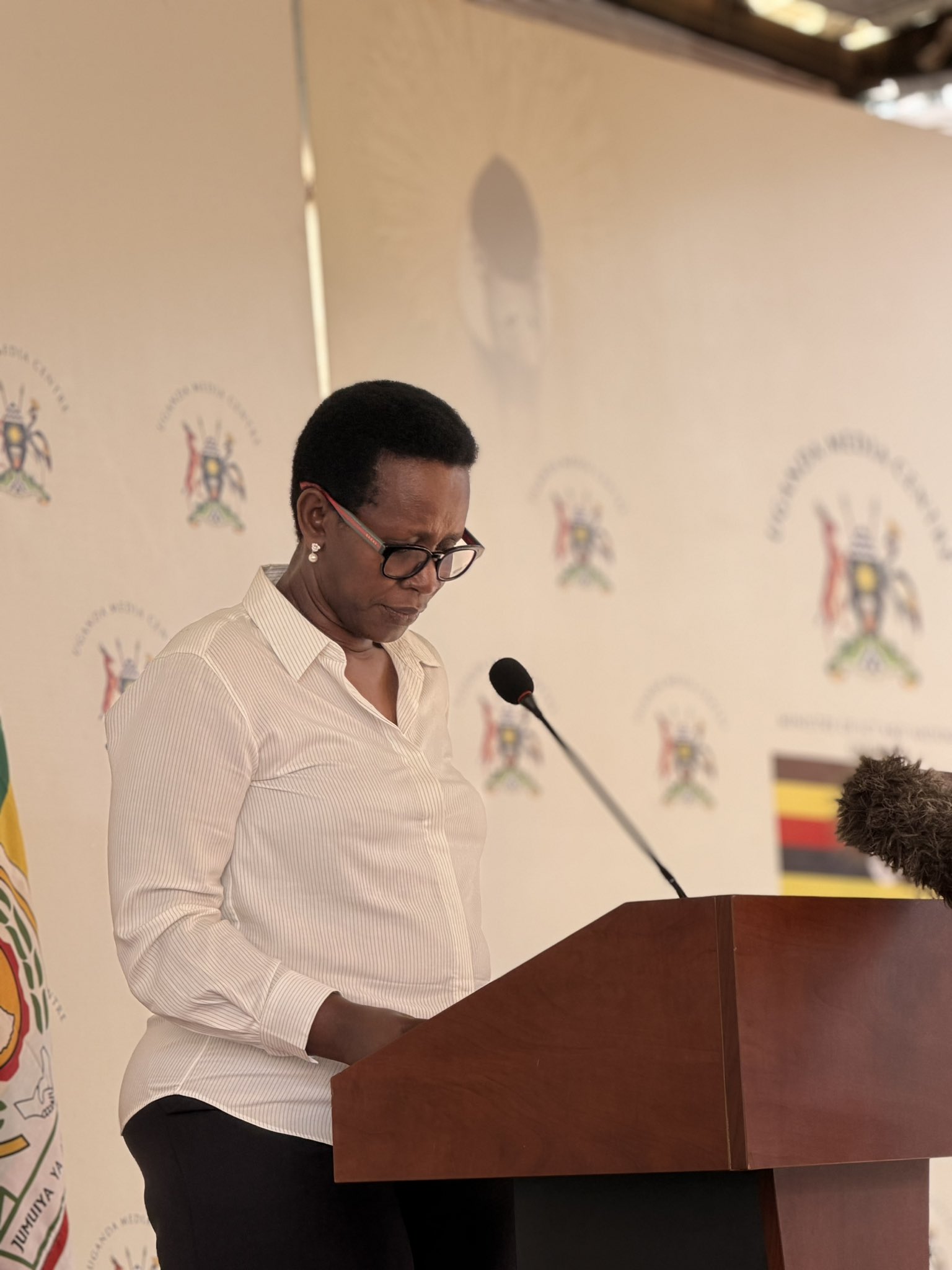
The Government of Uganda through the National Task Force on Ebola Response has announced the temporary closure of its border with the Democratic Republic of Congo (DRC) following the continued escalation of the Ebola outbreak in the neighboring country.
According to resolutions passed by the National Task Force on Ebola Response, chaired by Vice President Major (Rtd) Jessica Alupo, the closure took immediate effect on May 27, 2026, as part of measures aimed at preventing the spread of Ebola into Uganda through cross-border movements.
Under the new directives, only authorized Ebola response teams, humanitarian operations, food and cargo transportation, as well as essential security personnel, will be allowed to cross between Uganda and the DRC.
Authorities said all permitted entrants will undergo strict health screening, documentation, completion of locator forms, and continuous monitoring at all official points of entry in line with the Ministry of Health surveillance protocols.
The task force also directed that any person returning from the DRC into Uganda must undergo mandatory self-isolation for twenty-one days under the supervision of the Ministry of Health and district surveillance teams.
Despite the heightened alert, schools in border districts will remain open. However, school administrators have been instructed to strictly enforce all Ministry of Health Standard Operating Procedures on Ebola prevention. Schools are also required to identify students who recently returned from the DRC and monitor and record their temperatures daily for twenty-one days.
In addition, districts bordering the DRC have been directed to designate at least one health facility to accommodate and monitor learners who develop Ebola-related symptoms such as fever during the observation period pending further medical assessment.
Resident District Commissioners and Resident City Commissioners have also been instructed to ensure strict implementation and enforcement of all Ebola prevention and control guidelines issued by the Ministry of Health and the National Task Force.
Meanwhile, media houses across the country have been directed to dedicate at least thirty minutes of prime-time programming daily to public education and sensitization on Ebola prevention, detection, and reporting.
The latest measures come amid growing concern over the risk posed by frequent movements across the Uganda-DRC border, especially in western border districts.





Discussion about this post