



By Dickens Twinomujuni & Gerald Niyirinda
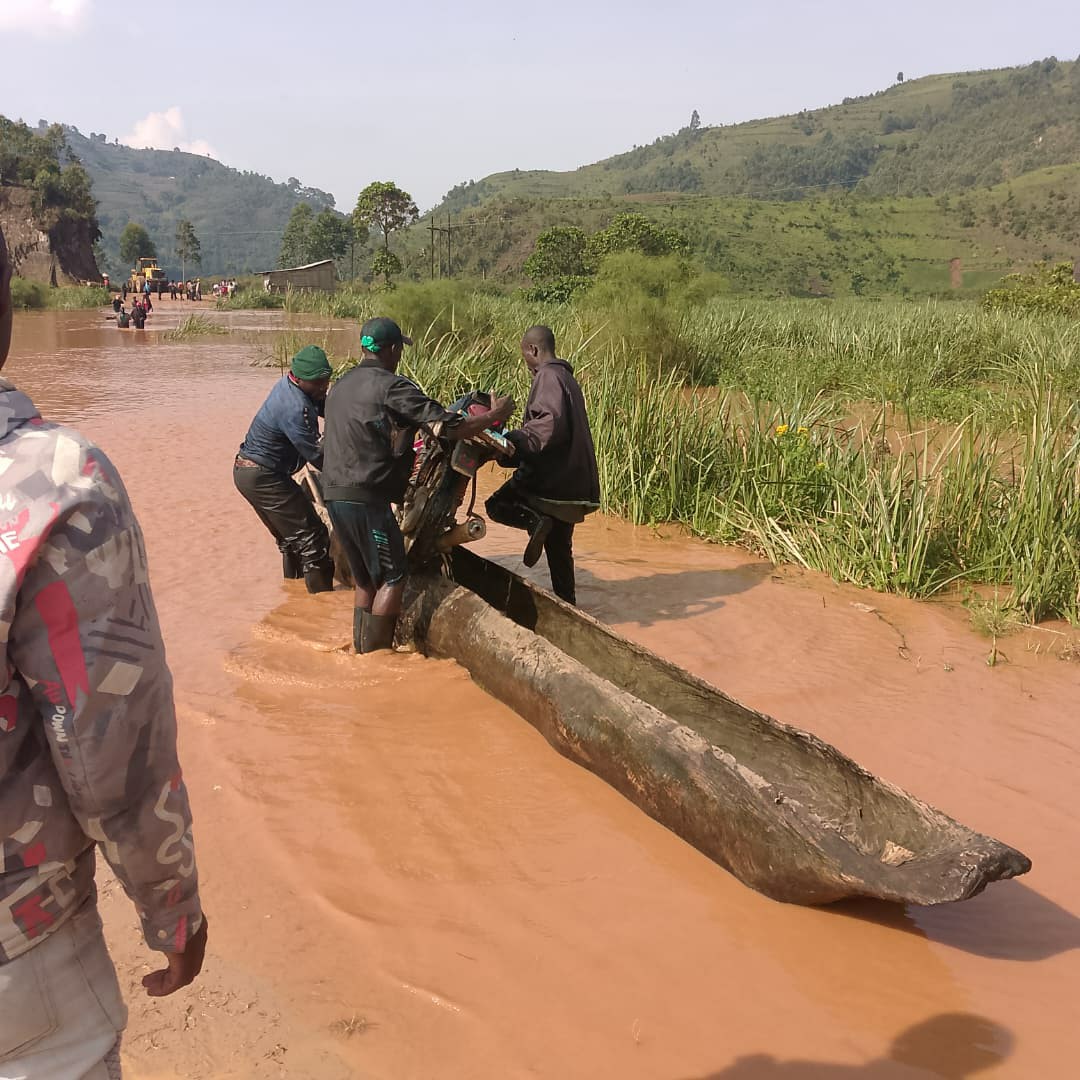
Residents in several parts of Kisoro District are counting losses after heavy rains caused widespread destruction, washing away a bridge, damaging homes, and destroying gardens.
Gatwe Bridge Destroyed in Bunagana
In Bunagana Town Council, residents of Gatwe Village have appealed to the government to urgently intervene after Gatwe Bridge was destroyed by strong waters from Ntebeko stream, originating from Mount Mgahinga.
The bridge connected communities to key services but has now left the road impassable, forcing residents and travelers to struggle to access markets, schools, and health facilities.
Residents say the destruction has severely disrupted transport and economic activities in the area and are urging district leaders and the government to urgently repair the bridge to restore normal movement.
Tourism roads leading to Bwindi and Mgahinga National Parks have also been severely damaged. The Ruhezamyenda section in Nyundo Sub-county remains a major hotspot, where tourists are frequently forced to disembark from their vehicles and be carried shoulder-high to cross flooded sections.
As a result, visitors are experiencing long and difficult journeys. Some are opting to stay only in Kisoro Town, which often disrupts their itineraries. This situation is also reducing tourism revenue, as tour operators struggle to transport essential supplies to lodges, while visitors face high and risky travel costs. Overall, the poor road infrastructure is estimated to be contributing to significant losses in tourism revenue for the region.
Floods Exhume Body and Destroy Homes
In another shocking incident, last week, residents of Nango Village in Maziba Ward, Bunagana Town Council were left in shock after heavy rainwater exhumed a body that had been buried for a week.
According to the LC1 Chairperson of Maziba Cell, Leo Niyibizi, a downpour that lasted more than two hours caused floods that swept through homes and gardens, leaving residents stranded.
Niyibizi said several houses and crops were destroyed and warned that the situation could worsen if proper drainage systems are not constructed. He noted that residents have repeatedly appealed to district authorities to improve drainage channels along roads, but their concerns have not been addressed.
Families Left Homeless in Muramba
In Sooko Parish, at least three houses were washed away by the floods, leaving several families homeless.
The LC2 Chairperson of Sooko Parish, Emmanuel Nizeyimana, said residents have suffered major losses after gardens were destroyed, warning that the damage could negatively affect livelihoods and food security.
Nizeyimana appealed to the government and well-wishers to provide urgent relief support to affected families.
Residents also expressed deep concern, noting that many farmers had borrowed money to invest in agriculture as their main source of income. They fear the destruction of their crops could push them into financial distress and are calling for immediate assistance to help them recover.
Leaders Criticize Disaster Response
The LC5 Councilor for Nyarusiza Sub-county, John Mfitumukiza, criticized the work of the Kisoro District Disaster Management Committee, accusing it of delaying responses whenever disasters occur.
Mfitumukiza said the committee often becomes active only after disasters have already caused damage, instead of taking early action and closely monitoring risk-prone areas.
Meanwhile, the LC5 Councilor for Muramba Sub-county, Martin Hakizimana, raised concerns about delays in the planned improvement of the Kisoro–Mgahinga road. He suggested that the delay could be linked to contractors from Samcrete who reportedly subcontracted the work.
However, the Assistant Chief Administrative Officer of Kisoro District and Chairperson of the District Disaster Management Committee, Rukundo Manasseh, said the committee is currently compiling a report on the areas affected by the disasters and assured the public that district leaders are following up on the matter.
Weather Forecast for Western Uganda (March – May 2026)
According to the Uganda Ministry of Water and Environment and the national meteorological services, Western Uganda is expected to experience near-normal to above-normal rainfall during the March–May 2026 rainy season.
This period is the first major rainy season of the year in the region and is expected to support agriculture, but may also increase the risk of floods, landslides, and infrastructure damage in some areas.
Key Forecast Highlights
- Seasonal rains in Western and Southwestern Uganda began around early to mid-March 2026. Some areas had already started receiving intermittent rains in late February.
- The heaviest rainfall is expected between early April and late April, with continued showers into early May.
- Rainfall in most western districts is expected to reduce towards late May, with the season ending around early to mid-June.
These highland areas typically receive significant rainfall during the March–May season.
Expected Impacts
Experts warn that while the rains are beneficial for farming, they may also cause:
- Flooding in low-lying areas
- Landslides in mountainous districts
- Damage to roads and bridges
- Disruption of transport and trade
At the same time, the rains are expected to improve crop production, water availability, and pasture for livestock.


Discussion about this post